About
I'm a Senior Research Associate in Machine Learning in Oxford's Department of Statistics, funded by the Leverhulme Trust and supervised by Prof Yee Whye Teh, Prof Nathalie Seddon and Dr Steven Reece. I use large language models, NLP and information retrieval to mine the evidence base for nature-based solutions to climate change, with the Leverhulme Centre for Nature Recovery and the Nature-based Solutions Initiative. It's also a vantage point onto other projects — mainly LLM robustness and its real-world applications.
Before Oxford, I worked across computational sciences: comparative genomics in Switzerland on the OMA project; a PhD in computational neuroscience at Imperial — during which I also worked with BarefootLaw on Winnie, an NLP tool widening access to justice across East Africa; and a research residency at X, Alphabet's moonshot factory, probing frontier LLMs and helping start its moonshot for professional intelligence.
If there's a through-line, it's the kind of problem I'm drawn to: wicked ones — messy, cross-disciplinary, resistant to any single method. I try to fall in love with the problem, not the solution — and follow it wherever it leads.
Increasingly, that pulls me toward mission-driven applied ML — agents for science, and AI for climate and the environment — and toward teams building toward those goals at scale.
Research interests
Large language models and NLP — their evaluation, robustness and real-world applications; AI agents and evidence synthesis for the scientific process, especially nature-based solutions and climate; and neuro-AI, taking learning inspiration from the brain.
Projects
Publications & writing
Full list: Google Scholar · ORCID · ResearchGate.
Talks & service
- Posters · UncertaiNLP workshop, EMNLP (2026); AI Scientist Summer Workshop, Microsoft Research New England (2026); NeurIPS (2024); COSYNE (2020, 2022).
- Area Chair · NeurIPS 2026 FLLMPT workshop.
- Reviewer · ICLR (2027); NeurIPS (2026); UncertaiNLP workshop, EMNLP (2026); ICLR workshops (2023).
Education
Patents
US Patent Application × 3 (co-inventor, Google X).
Up-to-date list on Google Scholar.
Teaching
Awards
Off the clock
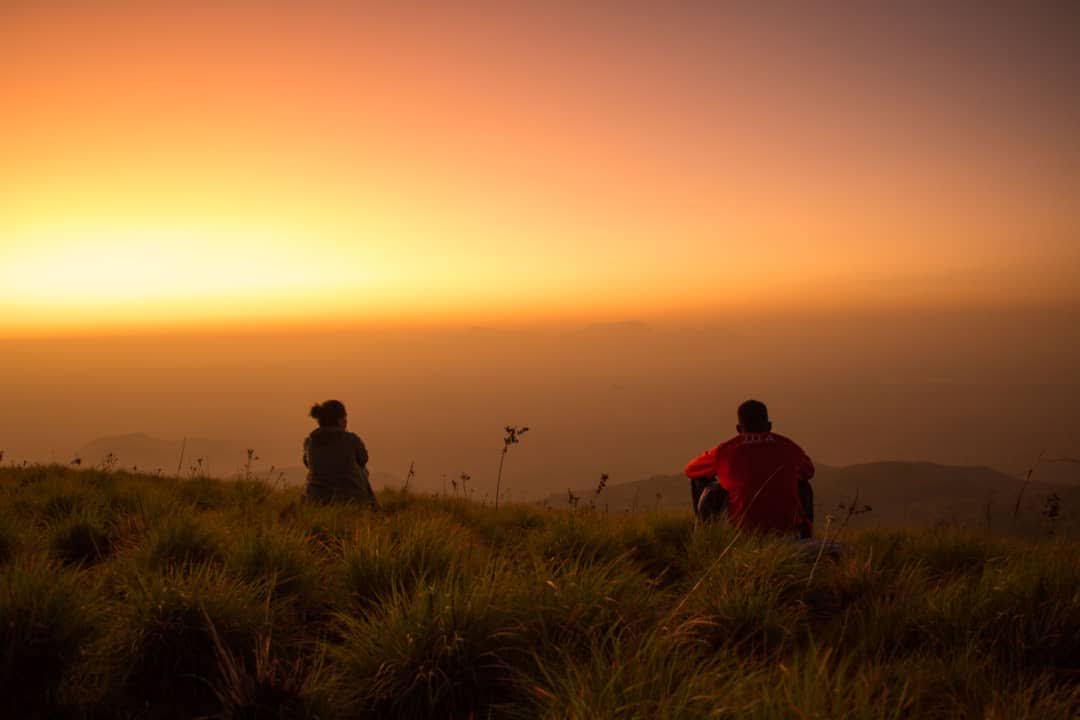
I grew up in East Africa with front-row access to some of the world's most incredible mountains — I've climbed Mount Stanley, Mount Kenya, Mount Napak and Mount Sabyinyo. That upbringing left me with a global conscience — and is a big part of why I work on the environment today.
Contact
Best reached via my Oxford page, LinkedIn, Bluesky or X — or email me.